Showing posts with label reflection. Show all posts

Design considerations: Scarecrow

I found that I had a far more difficult time drawing the scarecrow than the crow; I'm not entirely sure why. I think it's mostly due to the fact that I don't 'know' him very well — I've not really spent enough time with him. It's one thing to know a character's personality but another matter entirely to truly understand what makes them tick. But, again, this is mostly shape experimentation — once I've got a feel for the shape of scarecrows I can begin trying to get inside his head and really work on bringing some life into him.

Just to clarify, obviously what I'm putting here is simply my own interpretation of the characters — I hope I don't come across as if I've totally dominated the design! I just thought it might be helpful to put these up and show how I approached the subject. :]
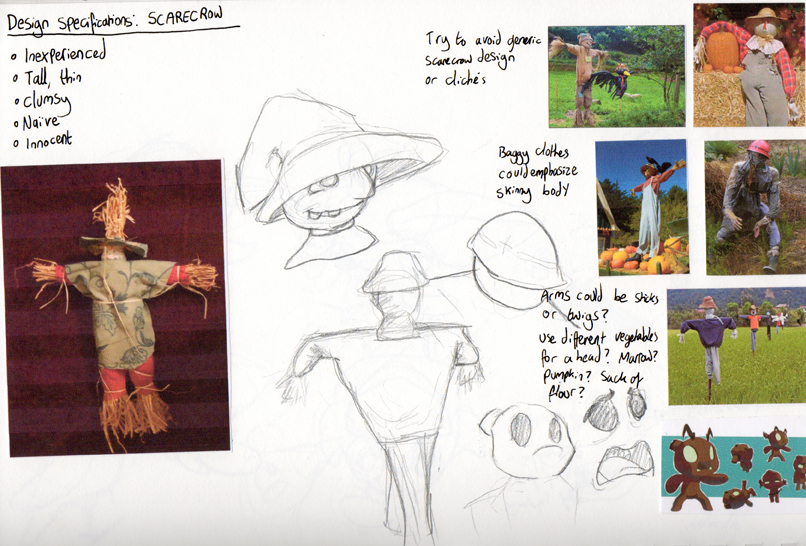


Again, I started just by looking very generally at some scarecrows. I really liked the one in the lower right corner; a great example of a simple but pretty refreshing take on the conventional scarecrow!


I toyed with the idea that maybe the scarecrow could look as if he was trying to be scary, perhaps by giving him long, thin and pointed fingers — perhaps they could even be made out of sticks?

Jazzy specified that the scarecrow should be tall and very thin to emphasize his clumsy nature — maybe we could give him big hands and feet to further suggest this? 

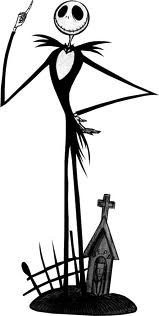
I was looking at some other tall, spindly characters as a point of reference —Jack Skellington in particular, as though he's a little different to what we're going for in terms of design his exaggeratedly thin limbs and a rather large, circular head are quite nice features for a scarecrow. I really liked how the eyes and mouth looked on Jack so I tried to incorporate something similar into some of the sketches.


I was mostly just experimenting with body language and more head designs here; I wondered how a naive and slightly nervous character might hold himself, I thought perhaps with his feet turned inwards, but he just ended up looking really timid and anxious. 

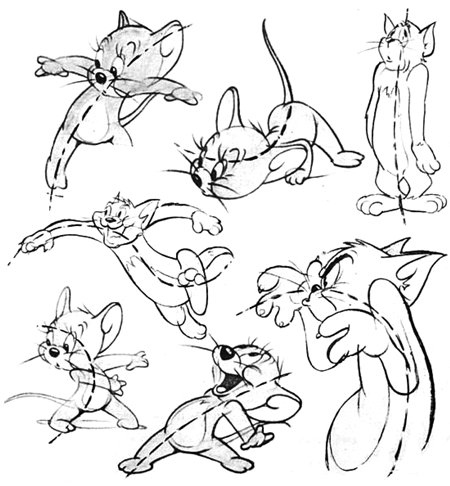
A stocky design for the crow might work quite nicely with a scrawny scarecrow — the combination of tall/thin and short/stocky characters is quite prevalent in a lot of children's animation. Many notable cartoon duos have massively contrasting body structures:

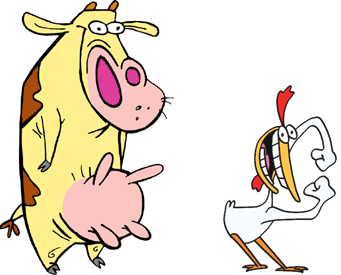


Radically different body structures in visual media where two or more main characters dominate the screen helps to create visual distinction and interest — strong silhouettes so that the characters remain recognisable in any given situation (at a distance, in the shadows, even in different costumes)

I thought this might be a nice idea to play around with and so experimented a little more with the idea of a short, fat crow:


I started trying to think more about character interaction at this stage — how the scarecrow might physically respond to the crow whenever it comes near him. Should it be outright terror, or is it more subtle? Is he merely uncomfortable around crows, or physically repulsed?

Was thinking about what sort of clothes he might wear and was slightly amused with the thought that, being a scarecrow, he just wore whatever leftover tat the owners had lying around — an outsized sweater, a lonely oven glove?

I'm going to focus more on actual scenarios and character interaction now, to try and really get to grips with the relationship and personalities of the two characters. Hopefully this will help me bring out more character in these drawings!

Movement, Story & Structure: Three-act structure

Still pootling along and worrying my silly head off. Tried to start organizing my ideas into some kind of vaguely coherent mind map in the hopes that it might give me a better sense of direction with the whole thing: (s'why I like these blogs so much — helps me restructure my incoherent ramblings into something vaguely cohesive!)

Pretty much a summary of what I've covered so far in a more visually coherent manner. Toying with animal masks and the concept of emulating "desirable masculine qualities" in each of those animals?

Considering the ending, looking at 'Oozat' as a frame of reference. The trick is to keep it simple — Oozat isn't tremendously complex, after all, but it's so well executed and portrayed with such confidence. It really works. Sorry, that's my anxiety speaking again. I am rubbish.

I stumbled upon Marx's "character mask" theory whilst doing some research earlier today and I suppose I'm now beginning to really worry that my idea isn't sophisticated or clever or deep enough. I keep catching myself trying to shoehorn more meaning into it to make myself seem bigger, cleverer and more imaginative than I have any right to be at this stage — maybe I really am just worrying too much.

I've been toying with a slightly sillier ending, involving perhaps the main character (dressed as a lion) getting into a fight with somebody else (to gain dominance) — the girl, irritated, getting up from the bar and calling animal control or something. It's a bit less generic, but again, worried it has no strength.

Movement, Story & Structure: Finalising the story/thinking about the pitch

I'm trying to really dig into my idea so far and bulk it out so that it stands up — I don't know if I'm thinking about it too much or trying to overcomplicate things, but it seems that the more questions I answer the more I start worrying!

Trying to condense it down:

The story is about identity. Many of us project different identities or aspects of ourselves to others, depending on what we're trying to achieve or communicate. We may dress up to make ourselves look big and impressive to a potential employer. We often feel we get a fairly good impression of a person based on what they're projecting — the mask that they wear. Conversely, there are things about ourselves or others that we make every effort not to project, things about a person you can't read based on their physical appearance, things that can completely jeopardise our attempts at communicating with that person. 

In this a story, a man attempts to communicate his interest to and subsequently impress a young lady he has seen. He dons a number of extravagant masks and costumes, projecting desirable qualities in an attempt to impress her, but she fails to take notice. Eventually he removes his costumes and stands there as he is — showing his true face for the first time. She appears to acknowledge him and he prepares to embrace her — but she walks right past, hugs and leaves with another girl who has just entered. It's left ambiguous as to their relationship — friends, lovers, family?

I think I have a fairly stable concept, it's just the execution of the story that I'm a bit flaky about — mainly the ending.

I'm thinking that a lot of the meaning could be conveyed through colour — he is so wrapped up in himself and his own insecurities that he fails to "read" her — his costumes/personas could be very bold and colourful in contrast to the drab scenery. She could perhaps be black and white, very sparsely detailed, representing his lack of interest or consideration of her. 


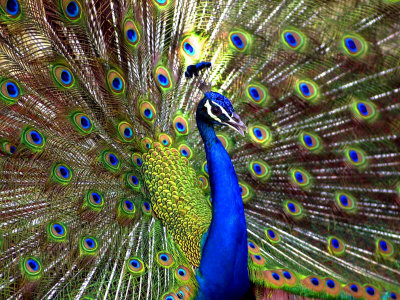
This is a really weird comparison but I think of peacocks (or any bird/mammal, really) trying to attract a mate — they make themselves attractive, or big and impressive. His "personas," masks or costumes could be based on animals, displaying what he considers "desirable" traits? Beauty, power, etc... 

When he displays himself without the mask at the end, the first time we see his face, he could be black and white and low detail as well. When the two girls embrace they could become colourful — I thought they could maybe turn into birds, but that seems silly. Not too sure so far!

Movement, Story & Structure: finalising a story idea/concept

Inspiration has struck at an ungodly hour and I think I may finally have something I can work with!

I was thinking about a number of different situations in which people may exaggerate or project certain aspects of their personalities, and I resorted to an old cliché — "man tries to impress a girl, but she's not interested."

I'm a bit stuck for the ending — I don't want to overcomplicate it, maybe just have her get up and leave with somebody else — but I don't know if that's too generic? She would ignore his advances and he would resort to more and more extravagant means to attract attention, to no avail — he would grow frustrated and paranoid — "I'm just not good enough!" rather than considering that, instead of being about him and "not being good enough," it could be something about her — there are certain things about people you are unable to ascertain by physical appearance. Things that can jeopardise our attempts to communicate, or that stand in the way of getting what we want.

I had a bit of a vision of the closing scene in my mind —


Maybe the guy is standing there, revealing his true face for the first time — she's looking at him (first person). We see the door crack open behind him, and she stands up, as if acknowledging him, he moves forward to hug her, but she just goes straight past him and embraces the figure who has just entered. He stands there, dejected, before slumping into his seat. View cuts to the front again, we see the two of them leaving together.

Might be interesting if they were both girls? Leave the relationship between them ambiguous — could just be friends, family, lovers?

I'm a bit shaky on it, I don't know.

Movement, Story & Structure: 2nd brainstorming session & ideas feedback

Yet another intensive day (thinking hurts)! We had to present our three most robust ideas for feedback and decide on one to develop further in preparation for the pitch next Tuesday.

My three presented ideas were... varying in overall quality, I suppose is the diplomatic way to put it, two centring around identity and the last related to phobias.

My first idea I was initially quite keen on, as previously described I wanted to animate to a recorded interview — similar Aardman's 'Creature Comforts' shorts:

It's a great example of how the best comedy or the best ideas simply come from everyday life and conversation — people say the strangest things and sometimes just shifting the context can make such comments hilarious, poignant or even just depressing. Very witty use of characters and subject displacement — something as simple as a piranha with a toothache works really well. I suppose this is something I'd been hoping I might be able to emulate as well — but in hindsight it's a very different subject and it probably wouldn't have lead to the desired result.

I was thinking of asking people to describe a type of person, group of people or subculture and have the character be built, come to life and change in accordance with the given description. I thought this could have been pretty interesting but it was problematic in that I would have been very limited to what information I could get from interviews. The idea would depend almost entirely from what was given to me — it would have been difficult to plan and schedule for it, and even (as Andy suggested) trying to gently engineer the interviews to give the desired results would have been tricky.

The second idea was the one with the masks; Andy did note that it was the third mask idea he'd heard that day but wasn't terribly surprised as, with four fairly standard themes, common ideas were bound to occur. It is, after all, how you approach and present the idea that's most important. He liked my suggestion of a big bag of masks, being awkward to carry around, representing emotional baggage, and suggested that I condensed the idea down to a simple domestic situation with conflict caused by or involving this baggage, as opposed to having a big long tale of a man getting up, going to work and encountering lots of people. He mentioned I should look at the way Darren Walsh used masks in his graduate film 'Oozat' — so I'll be having a poke around for that.

The third idea was quite similar to the first in terms of execution. Rather than interviewing, I was thinking of simply having some sort of recorded voiceover giving a (fictitious) account of something that had happened to them — a typically 'adult' worry such as debt, redundancy, or some other difficulty but animating that as a child might understand it. I was intending to represent the idea that as we grow older, fears and phobias are commonly seen as something 'childish' or as a sign of weakness — by illustrating them from the innocent perspective of a child I'd hoped to suggest that we are all reduced to a childlike state in the face of fear or danger. The biggest problem with this though is that I wouldn't be writing something that I knew — having never experienced something like severe debt (for example) I'd probably end up giving a very shallow portrayal. I did have some things in my head that I thought could have worked fairly nicely — representing 'debt' (or whatever) as a big, scribbled monster destroying a house as the voiceover described how their family and home was lost — but, ultimately, I do completely agree and it wasn't an idea I felt was really 'working' for me.

I think I'll be sticking with my second idea. The tricky part is going to be coming up with a relatively simple set up and conflict with enough legs to work with. I've been toying around with different settings — an argument over breakfast, washing the dishes, a pub — but nothing's really been sparking my imagination so far. Hopefully a quick break will help!

Sketchbook: 19/01/2012

Didn't get nearly as much done tonight as I'd hoped, owing primarily to my mother managing to get lost twice on the way back home. Subsequently, a journey that should only have taken an hour and a half ended up taking three. Ho hum!


Continuing my quest for perfect posing, I tried using a big red pen to very loosely capture the flow of the action through the body, giving myself more of a starting point. I then built on top of that, trying to start by looking at the tilt of the shoulders against the hips to keep things in balance. Certainly still far from perfect, but I feel like I'm beginning to understand it a little better - though I don't yet entirely feel the weight that I'm supposed to be drawing. That'll come with time I suppose.

Sketchbook: Lines of action

Been having a little look into the basics of posing in the hopes of helping my stiff clean up situation. The crux of strong, energetic posing is all about weight and balance so I'm revising 'lines of action' —an initial line drawn to express the momentum of a pose and "describe the force moving through the body."  


I tried copying some of the illustrations on the examples to see if I could try to understand how the line placement corresponded to the body but I don't think it really got me very far. Copying somebody else's lines doesn't really help you to understand the subject. I wasn't feeling the weight of what I was drawing at all. I tried a few experiments of my own, using poses from www.posemaniacs.com (Great drawing tool if you're not already familiar with it!)


Posemaniacs is a great resource but unfortunately it's not the same as drawing from life. It's helpful to understand the body and anatomy a little better but a lot of the poses are quite stiff. Still, I think it would be a useful experiment to try and exaggerate some of the poses!

I think that a large part of my problem lies in relying on sketchy lines to help a pose feel powerful, rather than keeping the actual feel of the overall drawing energetic. Because my initial posing and lines are a bit weak, my clean ups tend to look static and uninteresting. A good pose should be identifiable "feel" the same, even when reduced to a silhouette. If I can begin to fully understand weight and balance and figure out how to better express that in my drawings I think I'll be on the right track.

Similar to what we did in life drawing I think I need to start committing myself to drawing using less lines. I need to be able to capture the feeling and weight of a pose in as few lines as possible, which should hopefully serve to give my initial drawings more strength.

Sketchbook: hyenas, cats and old people

I've been wanting to keep myself busy over the break and had hoped to be able to get a head start on the next project. I've been drawing somewhat irregularly — my aim is to make a habit of it. I'm building up slowly — trying to do at least one drawing (or page of drawings) per day, which of course in the long run is nowhere near enough, but I want to get to the stage where it becomes second nature, where I don't even have to think about pulling my sketchbook out.

I had intended to start generating ideas for the next project already, before I learned that we would probably be given a list of words or themes to work from. Still, it's probably good practice to keep the ideas ticking over.

That being said, here are some doofy pages from my sketchbook from the past few days:


Nothing really behind these... just some doodles of hyenas. Top page was an actual exercise in observation, on the bottom is a page of doodles done whilst trying to sleep!

One of the books I got from the library gave some great suggestions on generating ideas; one was to take classic scenarios or stories and reverse character roles or insert new ones. I was just kind of messing around and turned Snow White into a disgruntled housewife who has to 'rescue' (or wake up) her oafish, sleeping husband.


I didn't really take it much beyond imagining some scenarios in my head before I got distracted and started drawing cats instead.


I looked at how some other artists and animators have simplified cats for use in comic strips or animation, to better understand how the relatively complex physiology can be broken down.


Understanding how something is built is crucial before you can start breaking it down and making it move, so I tried to get to grips with the basic anatomy of cats. They have really weird legs! 


I found a great little handout online discussing the anatomy of a cat for use in animation which I found really helpful, so I did some simplified drawings based on some of the examples there.


And then some more attempts to understand how the hell their hind legs work.

I don't really know if this was headed in the right direction but it's gotten me drawing again, which is always valuable practice. I think I'm rushing myself to try and get all the stuff in my head down on paper. I need to stop that, stop the panicking and just focus on a few little things at a time.

Andy suggested that I work on keeping the energy and quality of rough drawings through to the cleaned and refined version, which is something that I'd notably struggled with in the last few projects. I'm thinking of doing some more comic strips for general drawing/ideas/storytelling practice, so it might be good to try and combine the two. The last set of comics I did suffered a lot from the 'stiff artwork' problem (and just generally looking bad) so I need to get used to being less precious and working more loosely. 

Character walk & ball exercises — initial concepts and designs

It's been one of 'those' days.

The new part project kind of got off to a bad start for me. I don't know whose hands these are, but the drawings coming out of them certainly aren't mine. It was weird — I was talking to Jazzy and there seemed to be an endless flow of stuff, but as soon as I sat down to get them onto paper, everything just went. Proper idea constipation.
I got a few sketches down — including one with a flamingo that I actually quite liked — but as Andy rightfully pointed out it would have proved to be absolute hell to animate.

I started running loosely with something using the balloon, puddle and football — my idea was to have the character enter, a bit down in the dumps maybe, then to have a heart-shaped balloon with a letter attached drift by. He reads the letter as he walks along; whatever's written there really cheers him up and his whole demeanor starts to change. He maybe starts skipping, totally overjoyed ——
—— doesn't see the puddle approaching and falls right into it (ridiculously deep). He clambers out and is sopping wet, so he's kind of swinging his arms, weighed down with water, really angry and fed up. He encounters a football and boots it out of anger. It ricochets off the side of the screen and smacks him in the face, knocking him to the ground.

It sounds fairly fleshed out on paper but I didn't really manage to get too far with it. The character design tripped me up a bit.

I was really grateful to have Andy floating around today — he was really helpful and introduced me to a little yes/no game that I initially struggled with. Once I stopped overthinking everything I got much more into it!

As a result, I ended up with a fat old French man who can blink and is quite athletic, but doesn't like Mexican food.

Started doodling a few things to try and get a feel for the character. He still feels alien to me but I'm going to keep ploughing through and see what I can come up with. I'm definitely not there yet — still feeling a bit frustrated and lost, but it's definitely progress and certainly a vast improvement over the horrors of the morning. The character idea is definitely fun and quite exciting!

Ninth walk cycle attempt

I finally realised what was wrong. Not just with the walk cycles, but with everything. Disregarding the fact that ball bounces are generally more straightforward, I'd just been really struggling to get a grip on walk cycles. It's a bit hard to explain but I've just been feeling like I was missing something. The inbetweens just weren't coming together and I really didn't know why I couldn't grasp it. It's a relatively simple concept, so am I just stupid?

Then I had a bit of an epiphany. It's arcs. I've not been basing them on arcs of movement. I've always been aware of the idea that all movement is based on arcs, but I never really thought about it until now. It's nice though, I feel as if the penny has finally dropped and I'm excited!


Okay, so it looks terrible so far, but all the while I was working, everything made sense, and that's what excites me. It's currently way too fast, so I need to add a few more inbetweens to cushion it out a bit. The frames aren't really aligned properly, so it's a bit jerky as well.

I did a number of things differently this time 'round. To work out the inbetweens I flipped back and forth between the two keyframes and marked out with a small X where certain parts of the body (e.g. elbows, knees, heels) were on each keyframe. I was then able to see the arc between the two points, allowing me to plot each inbetween far more accurately. I really concentrated on leading the feet with the heels to give them more life. I think it looks better so far but I need to tweak it so the heel strikes the ground more directly.

The ridiculous arm swing was my attempt at making the arms a bit looser. Rather than having the lower arms follow the path of the swing exactly, I tried to have them flick upwards as they started to swing backwards... as you can see I ended up taking it a bit too far! He looks a bit of a prat but I've found it syncs quite well with Billie Jean by Michael Jackson...

I'd already drawn out the keyframes before thinking in terms of arcs so I was kind of saddled with flawed poses to begin with, making getting decent inbetweens almost impossible. If I'd started from scratch and really worked out the mechanics of each keyframe beforehand I think it may have come out much better. But it's a start. I think that once I've cleaned it up a bit and finished off the inbetweens it might be quite nice as a character walk.

Reflecting on research methods

I've noticed, especially these past couple of days, that my research work is becoming more and more of a struggle. I seem to be scouring books and websites for hours on end without really coming back with anything to show for it, and I think it's because I'm unfocused. I'm worrying too much about what I think I should be reading or writing down. Rather than working as I normally would I'm very aware of the fact that people will be looking at it and constantly asking myself if it's what they want to see, or if it's "right." It is, of course, hugely important to consider things like assessment criteria and presentation, but it's getting to the point where I'm too afraid to write anything down in case it's "wrong" — which is totally counterproductive!

I've decided to try and re-evaluate the way I carry out my research and development work by creating a basic research template for myself and highlighting key bits of information I should be looking for. It's easy to get lost in a sea of sources when you don't really know what it is you're supposed to be looking for — worrying which bits I should and shouldn't be looking at, wondering whether this is important or that's important — but by reminding myself of exactly what I need to pick out, I should be able to carry out research much more efficiently.

What I really need to know is —

who I'm looking at
what they did
why and how they did it

What key dates are there in the artist's history? What years were they active? What are their notable publications?  What exhibitions have they been in?

It all sounds tremendously obvious and probably just fundamental skills I should know already, but I often find myself feeling very overwhelmed by the amount of information available. A lot of it is often influenced by the author's own opinions so it can sometimes be difficult to pick out the important and factual information. A lot of things are simply made to sound important because they've moved the author in some way, meaning I tend to 'not get it' and worry that maybe I've missed something.

I'm not intending to imply that opinions should always be disregarded — they are of course extremely valuable — but in cases like this I think it's better to initially start off as cleanly as possible so that you can better evaluate an artist on your own terms.